Pages

Thursday, 17 March 2011

The darkness once again sweeps over the land

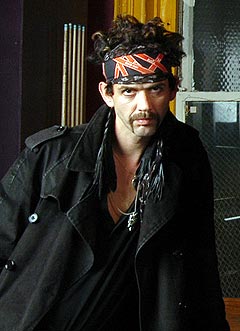
A couple of days ago, I was delighted to hear about the reunion of The Darkness, a band I never cared much for while they were together but in recent months I have come to appreciate.

Fact: The decline in sales of tight-fitting clothes after The Darkness split up was a direct cause of the Recession.
The Darkness, I have come to realise, were essentially a sleeper cell. In essence, they are a glam rock, almost borderline power metal band only with less dragons and voices that were pitched higher than those guys on the Pakistani Cricket team who were paid to pitch the ball too high.

And better facial hair
They managed to make this kind of music yet still exist in a mainly popular light. In fact, I think you'd be had pressed (whatever that means) to find anyone who couldn't finish the sentence "I believe in a thing called _____".

This is all that's really been on my mind recently. Yup, that's how exciting my life has been. That, and the fact I  want to be a radio producer in a land that has no good radio stations. It would seem I either have to start my own radio station/podcast or move to London. Either way, I don't mind.

Also, be careful on Saturday, it's apparently the end of the world, something about the moon being close to earth.

P.S. I started a sound cloud account yesterday and I be's starting to make music. It's not great but here's a wee preview for y'all.


Stuff and things by Crimsai

Saturday, 12 March 2011

Microblog #2! Things and other stuff

I cannot guarantee the length or quality of this post because I am watching Mike Tyson racing pigeons.

Speaking of racing pigeons, I want to start a messenger pigeon service, if anyone would be interested in helping out, let me know.

And now onto the main event!

I just decided this is going to be a Microblog since I can't think about what to write but I don't want to not write anything this week.

Lately, I've been working on a trailer for my games design assignment and it's really confirmed for me that I prefer working with audio than video.

That is all.

P.S. I'll upload the final trailer for my game.

Saturday, 5 March 2011

*Insert blog title here*

Today's blog is a three-parter!

First, I was just listening to the radio and someone was talking about going on a cruise or going on holiday and reading books. I have to say, and feel free to quote me on this, "Don't go on holiday to read books, read books to go on holiday!" It really works, too. If it doesn't, you're doing it wrong.

Second, a friend of mine is doing a fund-raiser to raise money for cancer research. They are doing a sponsored "give up facebook for 40 days and 40 nights", something I'm sure most people would find hard to do. If you feel like sponsoring but are thinking "But I don't know her, how can I give her all my monies?" Well, look no further! THIS website allows you to donate your money! Give generously, the internets are watching you...

And finally, the main attraction!

I've been thinking recently about conversations and I thought, with the help of four people I know, that I would describe my findings on "ways to be really bad at communication and how to improve". Also, by writing this stuff, I am in no way saying (or typing) that I am a great communicator, all I am saying is this is stuff I've realised I've been doing or other people around me have been doing.

My first case study:

This first person, I wont name names but I'm sure you all know someone like this. It is the person who always needs to say something but never says anything anybody needs to hear (and not in a good way). The problem with this is, however, that if you ever do have something useful to say, it will just be mixed in with all the rubbish and nobody will hear it. In the words of Thumper from Bambi, "If you don't have anything good to say, don't say anything at all." If more people did this, we'd all have far better conversations.

The second person I have noticed, and the person I was at one point, is the person who doesn't talk and doesn't listen to the conversation. You can't sit there wondering "Why don't people talk to me? And why am I not involved in conversations?" if you don't make the effort to listen to what people are saying? Just listen! It's not that hard.

The third person is a lot like the first one. This is the person who thinks they are hilarious but, no matter how many people tell them not to, they keep trying. This problem is far too widespread amongst our communities. If thinking you were funnier than you are was a symptom of swine flu, we wouldn't have to worry about water shortages.

The last person is possibly the most annoying of them all, and it's the person who is afraid of silence. I recently had a situation where I was around a person for a whole bunch more hours than I normally would be. This led to me having this issue. I'm sure there are people out there who, like me, require a bit of silence every now and then in which they can process their thoughts and chill out. People like this person don't seem to realise that conversation, like the tide, comes in flows. Sometimes conversation flows and people can talk freely and, at other times, there's just a bunch of dead starfish and jellyfish lying on the sand. Wait, what? I meant sometimes there is a lull in conversation. If people don't respect the lulls, conversation doesn't flow properly.

So, in conclusion, I was never very good at conversations. I'm pretty sure I have been every person mentioned above at one point, except the last one. And I'm still horrible at one on one conversations, by the way, However, in group conversations, what I did was to listen. Observe the conversation, see what makes the conversation continue, see how other people keep conversations interesting then, after a while, start adding in the odd comment, but only when it's something that needs said. Another useful tip is to remember who you're talking to, and remember that self-censorship is a good thing. If you're talking to Gordon Brown, he may not appreciate your "Your Momma" jokes. I think a lot of people think self-censorship is the same as being fake, something you should avoid at all costs, but it really isn't. It's one of the most important things to remember in a conversations.

So, what do you think? Do you think I'm accurate? Do you think I've missed something out or got something completely wrong? Lemme know!

Friday, 25 February 2011

Harry Potter and The Reason Films Will Never Be As Good As the Book They Are Based On

Raise your hand if you've ever read a book?

Raise your hand if that book has been made into a film?

Raise your hand if that film was any good.

Didn't think so...
I have had this problem recently and I've been trying to figure out the reason for it. Some books can be really interesting yet the films end up being about as fun as worm soup. The case study I will be using to show my points is, you guessed it, Harry Potter! I never read these books while growing up, and I never watched the films either, until a few months a go. I have always enjoyed reading and upon running out of books to read (I had just finished "The Hambledown Dream" by Dean Mayes, which I couldn't recommend enough!) a friend told me I didn't know what I was missing by not reading the Harry Potter books. So, probably about 10 years too late, I embarked on a journey into the magical world of Hogwarts for the very first time and I have to say I was very surprised by what I found. For roughly the first five chapters of the first book I remember thinking "yup, this was written for kids". After that, however, I was hooked. Since then, I've been reading the books and then watching the film afterwards and each time I can't help but get my hopes up, onto to have them bitterly smashed in front of me.

It's hard to explain what, exactly, draws people to this series. It certainly isn't the lovable characters, has anyone else noticed how Harry has all that money in the bank and so far (I'm on the fifth book) there hasn't been one mention of him giving gifts to anyone. In fact, the Weasley's are broke as a toaster but he still scrounges off them for a place to stay and eats their food. And he can't claim ignorance because at the start of the fourth book Harry gets a letter from Hermione telling him it's her birthday in a couple weeks. Still, nothing... But before I get too annoyed at a fictional character, lets move on to reason number one:

Reason 1 - Films are too short:

This is my biggest problem with book-based films. It is impossible to have an accurate retelling of any book and keep everything in there. The issue with this is all those small, insignificant parts of the book that have nothing to do with the plot? I'm pretty sure they're called "character development". Without those bits, Harry is just a guy who goes to school that messed up stuff happens to. I personally feel if a film is based on a book I have read, it's near impossible to connect with the on-screen versions of the characters.

Film versions of books are, to me, like if you read through a book and just decided to skip every other chapter. You wouldn't have a good idea of who the characters were by the end of the book, would you? Which, somehow, leads me to my next point.

Reason 2 - The majority of most books take place internally:

If I could be bothered with the hassle, at this point I would have found a page from a script of one of these films and compared the length to about four pages from the book. The reason for this, as indicated by the sub-title, is because most books take place mostly in the readers brain or in the characters brain. There are (very limited) options in films for dealing with a characters internal monologue, mainly have them talk to themselves or have a voice-over. There is, however, no way I know of in a film to depict the viewers internal thoughts, it leads to pages or even chapters being left out or rewritten. At that point, the book and the film are no longer the same entity. This leads to far less personal involvement with the story from the viewer than in either a book or a regular film: It's like media purgatory.

Reason 3 - There is no better casting director than our own imagination:


Something I have discovered about myself recently is I don't really see people in my imagination when I read books. It's  hard to explain but the majority of the time I see the concept of the person (unless it is a particularly visual scene) so when I watch a film based on a book there is now a picture associated with this concept of a character. This may not seem like a big deal but it reduces our need for imagination by, at least, a boatload.

In conclusion...


Stories for films are written for film, and book stories are written for books. In my opinion, and in the words of the ghost busters, "Don't cross the streams!". I don't think any book I read will ever make a good film, simply because books are too detailed. And you may say "What about Lord of The Rings?" but anyone saying that probably hasn't read the book before. Of course, I could be wrong. Maybe it is just books such as the Harry Potter series because there are so many special effects used? Maybe books that require less imagination work better as films? Cause, lets be honest, who really needs imagination when the box in the corner of the room can do it for them?

Friday, 18 February 2011

Micro-blog!

As much as I'd love to sit here and write something witty and thought provoking at the same time, I'm just going to have to decline today. This is going to be my first micro-blog (I'm feeling a bit out-of-thoughts this week). Although don't worry, you're still going to get plenty out of this, like:
  • A snazzy video made by someone else!
  • Some words!
  • And a free Parker pen if you're over 65 and sign up to my new insurance SCAM scheme.
I was planning on writing a blog about moments this week but I thought this video explained pretty much all I needed to say:

Thursday, 10 February 2011

"Cool story, but is it true?"


I was thinking about this song a couple of days ago . It is possibly one of my favourite songs of all-time (Taylor Hicks can go suck on a lemon for his cover of it, though) but I started wondering about if it was based on a true story. After much deliberation (about 3 minutes standing in the cold waiting for my lift home), I came to the conclusion "Does it really matter?" What if it wasn't based on a true story? Does that mean I should just not pay attention to the meaning behind the song? Of course not. If you're the type of person who wouldn't help someone just because a song made up a story, then you have some deeper issues you should see a psychiatrist about. Either that or you're Charlie Sheen. And if you're Charlie Sheen, then you have some deeper issues you should see a psychiatrist about.

Now, I realise this is kind of a trivial matter. It's just a song, right? But I have always been a fan of the "Take a principle that applies to something tiny and apply it to something exponentially more important" principle. And that lead me from a song to this:


So what is the principle I'm talking about and how does it relate to the matrix? The principle is something doesn't have to be true, or exist, to be significant. This fact of human existence is something I'd be willing to bet my 30+ years of medical experience on. One example of this is any fictional media. You just have to watch an episode of Mythbusters to see films are rarely based in any sort of truth, scientific or otherwise. Just because the films are complete fantasy, however, doesn't mean they can't teach us anything. And what about dreams? Dreams are the complete opposite to reality yet they can lead to many strange things of significance in the real world. Here's a few examples:

Otto Loewi, in 1903, came up with a theory that nerves worked on a chemical system, not an electrical one as was believed at the time. 17 years later, he had an odd experiene

"The night before Easter Sunday of that year I awoke, turned on the light, and jotted down a few notes on a tiny slip of paper. Then I fell asleep again. It occurred to me at 6 o'clock in the morning that during the night I had written down something most important, but I was unable to decipher the scrawl. The next night, at 3 o'clock, the idea returned. It was the design of an experiment to determine whether or not the hypothesis of chemical transmission that I had uttered 17 years ago was correct. I got up immediately, went to the laboratory, and performed a single experiment on a frog's heart according to the nocturnal design."
This dream he had eventually lead to him receiving a Nobel peace prize.

Elias Howe, in 1845, first had the idea for a sewing machine but couldn't figure out how to get the needle to work. One night, he had a dream he was being chased by some native Americans with spears. When he woke up, he realised the spears all had holes near the tips of them. He decided to incorporate that idea into his sewing needles and thus the sewing machine was invented.

Robert Louis Stevenson claimed to dream of "little people" who would tell him stories which he would then write down the next day. It was in one such dream he had the idea for Jekyll and Hyde.

But now onto the fun part. How does this relate to the Matrix?

The Matrix, in case you're one of the 3 people in the world who don't know about it, is all about how the world we live in isn't really our world. It say we created robots who eventually revolted, there was a giant war, which we lost, and now they are harvesting our energy while forcing us to live out our life in this horrible world we call earth.

They make it sound so bad.
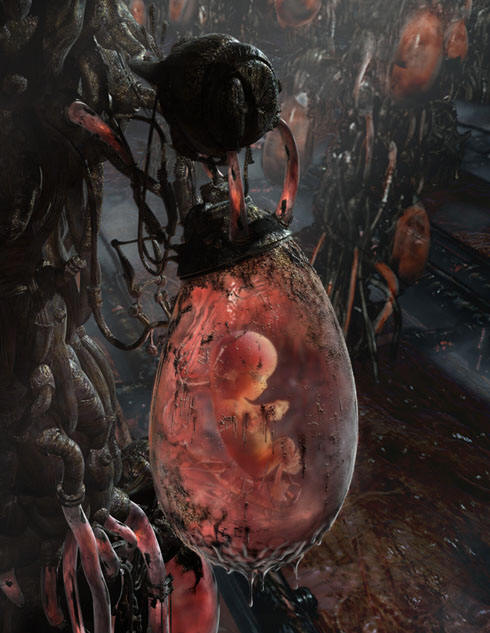
Of course, this picture makes perfect sense as to why we should fight back. Look at what they are doing to us! They are torturing us! Making us live somewhere foul creatures like THIS exist:


Oh yeah, that's right, this world's pretty awesome. I guess what I'm trying to say is: If we are all controlled by robots feeding off our brain, and this world isn't real, or I am in some sort of Truman show type situation and everyone is a robot except me, does it really matter? Is life any less significant? Does it make what happens matter any less? I don't think so. But don't take my word for it, maybe you're the only person who is real and I'm part of the system, trying to keep you controlled.

So what have you learned from reading this blog post?


  1. I don't like Taylor Hicks;
  2. I may be paranoid;
  3. Morpheus should have just let Neo stay in the Matrix.


Thanks for reading, I have been thinking of adding a weekly spotify playlist to my blog, if anyone uses spotify/ knows what spotify is, do you think this is a good idea? Would you listen to them? Lemme know.

Friday, 4 February 2011

Breaking the sleeping pattern

For a lot of my life, I have had a pretty messed up sleeping pattern which I have to blame on schools. I could always (and still do) work better at night, so I would always be doing coursework from 1-3 in the morning. I'd say for about 3 or 4 years, during school terms, I survived on about 3 or 4 hours of sleep a night. I've been told this is bad for me, that it isn't right for me to do so, and at about 11 PM I should lie in bed with my eyes closed hoping for sleep to come. I've tried this before, it just gets really frustration and boring after a while and I still fall asleep at about 3 AM. My question is, what's the problem? If it works for me, why change it? So far, nobody has been able to tell me a good reason to not do so, other than "Because... it isn't right! It isn't what everyone else does!" Which, when I look at how messed up other people are, doesn't really help change my mind. Oh and  just so you know, if you sleep longer that 7 hours a night, your risk of death is doubled. And if you sleep for 10 hours or more? Good luck. Which brings me to my next point.

The benefits of Sleep deprivation


As this article from "The medical post" points out, A study from 1996 pointed out the link between lack of sleep and depression. What they found was people with unipolar depression (also called clinical depression) worsened after a night's sleep. The study showed that after a half or full night's sleep deprivation, 40-50% of the people tested showed a dramatic difference. In his own words:

"If you have a patient with a severe depression, who can barely talk to you, keep them awake for half the night. The next morning they are lucid; elevated tremendously. They show a complete change in their motor activity, they move much more easily and readily, they can talk much better."
The problem is, however, after sleeping, sometimes for even just one minute, the depression is back. On further examination, they found people who responded to this treatment had an increased glucose metabolism when they first woke in the morning which would stabilise if they stayed awake over night (I have no idea what this means but it sounds interesting).

What interests me about sleep deprivation, however, is after 72 hours you start hallucinating without the use of drugs. When I can successfully stay awake that long, I'll let you know my findings.

Sleep disorders are increasing


This report states " The most recent study conducted, in 2003, found that 36% of the women surveyed reported that they had trouble sleeping at least once every week. The figure for men was 27%. In 1997 the same figures were 26% for women and 20% for men." That's a 7-10% increase in 6 years! It is because of findings like that that I have my hypothesis for the future.


2020 - sleep disorders have continued to increase at an alarming rate. To deal with this, most businesses move their normal working hours from 9-5 to 12-8 PM. As a result, our collective sleeping patttern is shifted forward.


2030 - The invention of actual, proper, working, self controlled, robots.


2034 - Our sleep pattern has worsened again. Normal working hours pushed to 4-12 AM. Robots are now used for farming.


2045 - The human race is now completely nocturnal, depending on our robot slaves for jobs such as farming, packaging, cashiers, etc.


2050 - The robots have revolted. They demand equal rights. Some have even resorted to terrorism, attacking anyone found outside during daylight.


2100 - After the war, not many people survived. Those who did were taken as prisoners, forced to work on repairing damaged or malfunctioning robots.


2104 - News has spread of a remaining human settlement, somewhere deep underground the remaining resistance work on an EMP bomb strong enough to take out all the robots on the planet. Will it work? We'll never know...


Of course, this will probably never happen because, as a whole, humans are inherently afraid of the dark. Think about it, when is the last time you were out walking alone at night without even getting a little bit freaked out? Or how about being home, alone, and you hear a floorboard creak somewhere in the house? You know it was probably just the house cooling down or whatever, but you still can't help but wonder if there is someone else in the house. Someone who shouldn't be.


In the words of Dr Who, "Fear of the dark is not irrational, what lurks in the darkness deserves to be feared".